The useful bit
Separate open jobs, estimates, and future marketing so every message has a clear purpose.
Plumbing customer follow-up becomes difficult when estimates, service questions, and promotional reminders live in the same list. A homeowner waiting for an answer about yesterday’s visit does not need a generic offer today.
Start by separating the reason for each conversation. This guide gives a small office a practical way to organize open items, assign the next action, and stay in touch without sending unnecessary messages.
1. Separate the three kinds of follow-up
Use one group for open service questions, one for estimates awaiting a decision, and one for future customer communication. Each group needs different timing and ownership. An unresolved service question should become a task for the appropriate team member, not an automated sales reminder.
Keep the customer record shared so the person answering the phone can see the latest exchange. If two records belong to the same household and job, reconcile them before scheduling messages. Otherwise, one person may be receiving a reminder while another is already discussing the appointment.
2. Give every estimate a next action
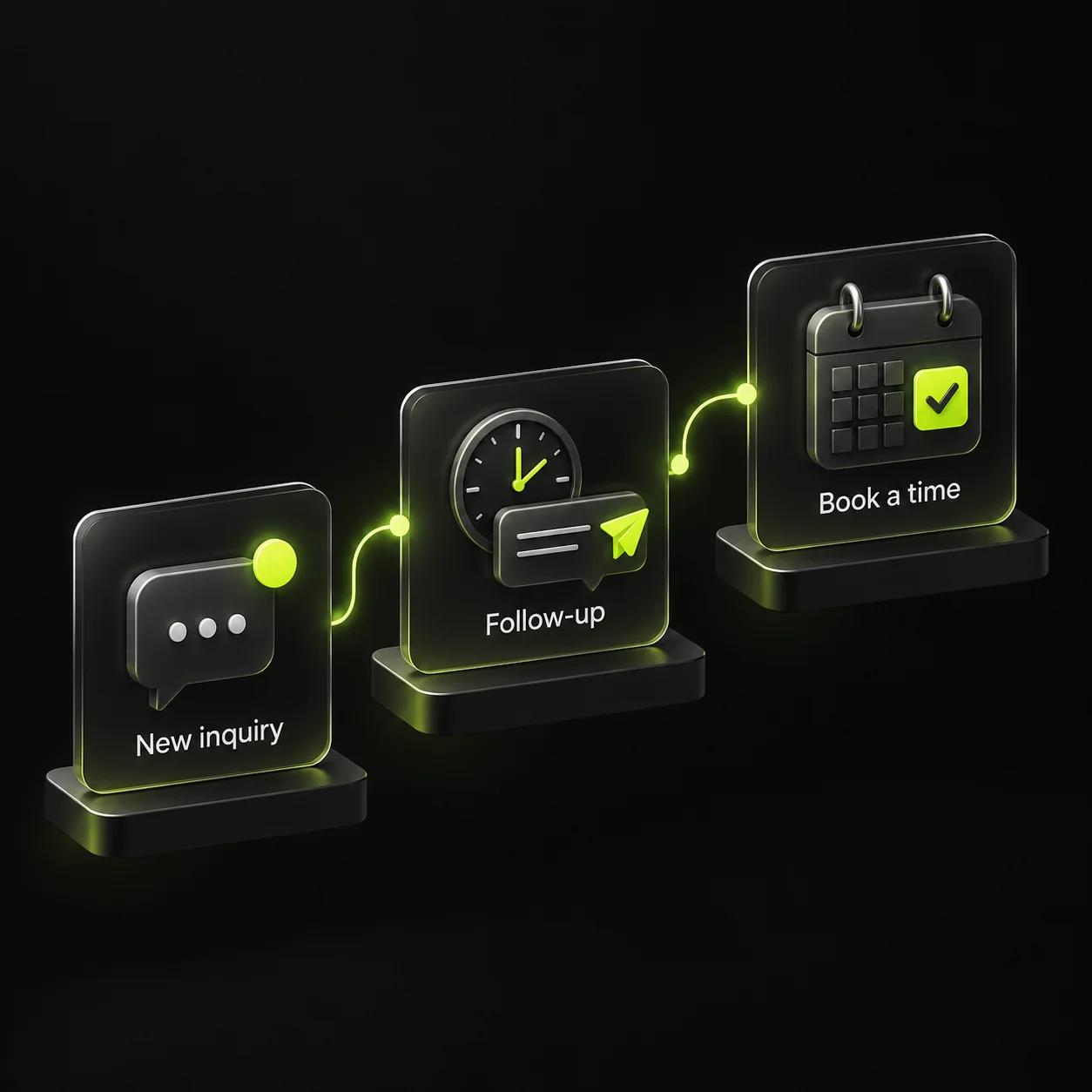
When sending an estimate, explain the scope, how questions should be raised, and when you plan to check back. Ask about the customer’s decision timeline instead of assuming everyone is ready this week. Record a date and an owner for the next contact.
If the customer says the project is postponed, pause the current sequence and record the agreed timing. If the estimate needs revision, make that revision the next task. Sending the same reminder again will not resolve a question about what is included.
3. Close the loop after completed work
Use a short completion message to point customers toward the right contact if they have questions. Keep service follow-up separate from a review request so a response does not get lost among automated messages. Assign replies to someone who can investigate the job details.
Look for recurring questions that should be answered earlier. If customers frequently ask who to contact after the visit, add that information to the completion message. If they repeatedly misunderstand an estimate exclusion, fix the estimate explanation rather than relying on another follow-up.
4. Make future reminders relevant
Use a permission-based customer list for promotional campaigns. Segment by a known service interest or an actual upcoming reminder, not a guess about what might be wrong with a home. Avoid implying that equipment needs work without an assessment.
Explain why you are reaching out and give one useful next step. Exclude customers who already scheduled the promoted service or asked not to receive the campaign. Keep a clear record of communication preferences so a new team member does not restart a stopped sequence.
5. Review unanswered questions every week
Create a short list of conversations with no owner, overdue actions, and estimates awaiting a promised revision. Resolve those items before increasing campaign volume. The objective is a reliable next step for each customer, not the largest number of messages sent.
Turn common questions into useful website answers. Google’s people-first content guidance encourages content that helps an intended audience; your own customer conversations can suggest where that help is missing. Remove identifying details and answer the general question without presenting a single job as a universal result.
- Every open conversation has an owner.
- Every estimate has a next action or a closed outcome.
- Replies pause automated sales reminders.
- Customer preferences carry across campaigns.
Sources & further reading
The workflows and templates are DYZIGN LABS suggestions. These primary sources support the platform and maintenance guidance referenced above.