The useful bit
Separate maintenance from project work and collect only what the team needs to choose the next step.
A landscaping quote request form should help your office understand the property and the kind of work being requested. It should not force a customer to measure every bed or design the project before your team has spoken with them.
The most useful starting point is a clear split between recurring care and one-time work. Use the fields and workflow below to prepare a better conversation while keeping the first request easy to complete.
1. Start with the service the customer wants
Offer a short list that reflects your actual work: recurring maintenance, seasonal cleanup, installation, or another service you provide. Include “not sure” for customers who need help describing the request. Do not list services solely to make the company appear broader.
Use the choice to route the inquiry or show a small number of relevant follow-up questions. A maintenance prospect may need to discuss frequency, while an installation prospect needs to describe the project goal. Keep the initial form focused on those differences.
2. Collect practical property information
Ask for the service area, property type, contact details, and a short description. If rough property size helps your team decide whether to assess the job, make the units clear and allow an unknown answer. A precise measurement requirement can be premature for an initial inquiry.
Offer optional photos of the areas the customer wants reviewed. Explain that these help prepare the discussion and do not replace an assessment when one is needed. Avoid collecting access codes, payment information, or unrelated personal details in a public estimate form.
- Service requested.
- Property city or ZIP code.
- Residential or commercial property.
- Preferred contact method.
- Brief description and optional photos.
3. Ask about timing without promising a slot
Let customers indicate whether they are planning ahead or seeking work soon. For recurring maintenance, ask about desired frequency if it changes how you prepare the quote. Do not present a preferred date as an available appointment unless your actual scheduling system supports that commitment.
Explain whether the next step is a call, remote review, or site visit. If certain project types require assessment, state that before the form is submitted. Clear expectations reduce the need for the office to correct an assumption later.
4. Connect the request to the person scheduling work
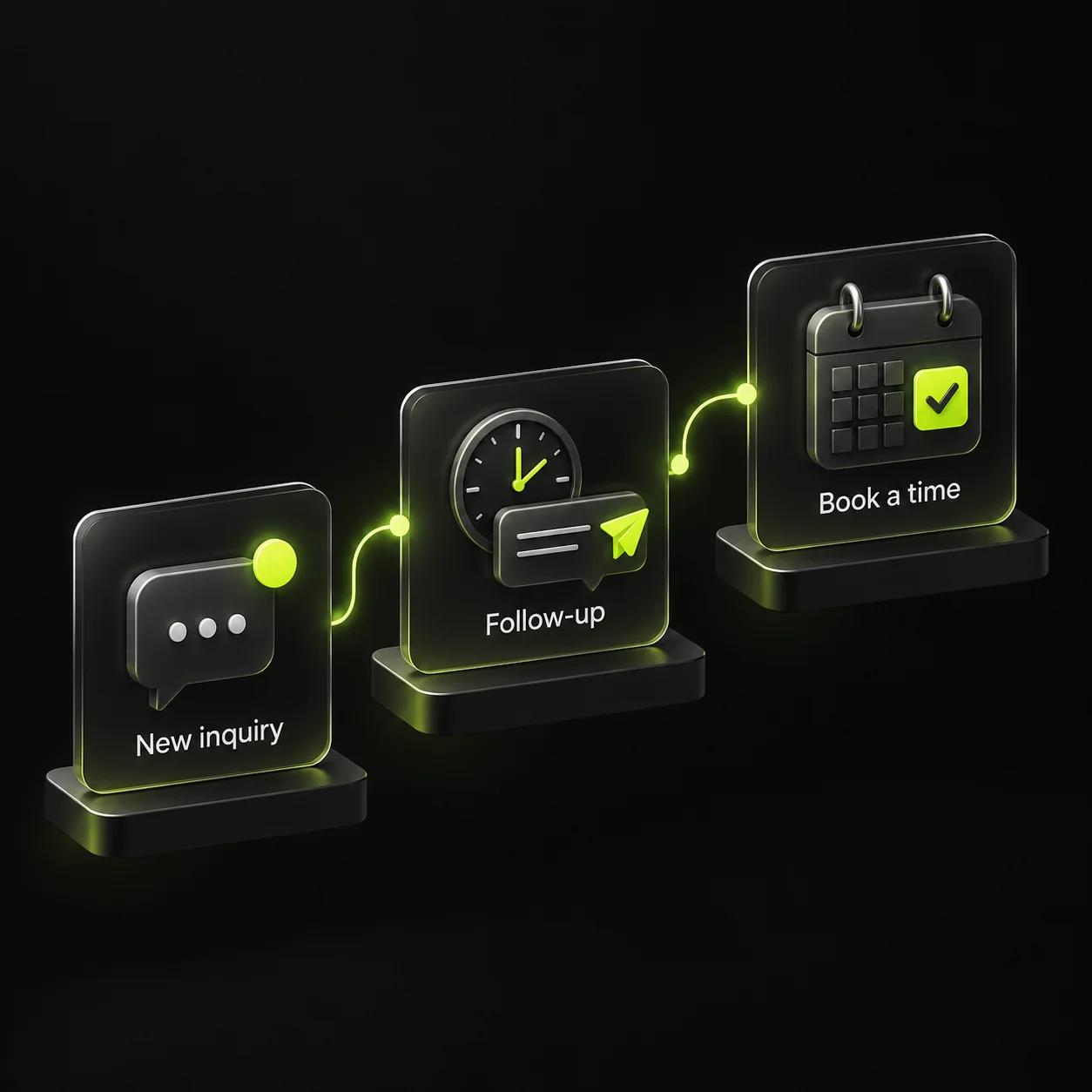
Include the service choice and area in the office notification. Assign an owner and a next action so a request does not sit between the estimator and the crew scheduler. Keep any customer photos with the record rather than scattered across personal messages.
Test both recurring maintenance and one-time project requests. Include a request outside your service area to confirm that it receives an appropriate response and does not enter a booking reminder sequence. Test the form on a phone and verify error messages as well as the success path.
5. Improve the form from actual conversations
Google Analytics can measure a specific lead form submission as a key event. Compare that event with inquiries received, then track site visits, estimates, and accepted work separately. A successful form submission does not establish whether the job fits your route.
After a small set of inquiries, ask the office which information was repeatedly missing. Add only fields that would have changed the next step. If a question is better answered during assessment, leave it there. The form should make the first conversation easier rather than try to replace it.
Sources & further reading
The workflows and templates are DYZIGN LABS suggestions. These primary sources support the platform and maintenance guidance referenced above.