The useful bit
Market the work that fits your crew, focus on areas you can serve efficiently, and make recurring service details easy to compare.
More landscaping inquiries are not automatically better. A scattered schedule of small jobs can add travel and administrative work without creating the kind of business you want. Start your marketing plan with the route, service mix, and crew capacity you can actually support.
This guide focuses on recurring landscape and lawn maintenance, with a separate path for larger projects. Use the steps to decide who to reach, what to show them, and how to move an inquiry toward an accurate estimate.
1. Separate recurring maintenance from one-time projects
Routine mowing, seasonal cleanups, and landscape installations involve different scopes and buying decisions. Give each a clear place on your website. Someone looking for a regular maintenance schedule should not have to interpret a gallery of large installation projects to discover whether you offer it.
Choose the work you want to promote based on crew skills, equipment, available time, and the services customers already ask about. Write down what is included and excluded. If hauling, materials, or seasonal tasks cost extra, say so before the estimate becomes a surprise.
For recurring service, explain visit frequency, seasonal changes, weather scheduling, and how changes to the property affect the quote. Do not advertise a universal starting price unless you can explain exactly what property and scope it applies to.
2. Pick a service area your schedule can support
Look at where your current customers are located and where the crew spends time driving. Choose a manageable area for your next campaign. The goal is to make new work fit your operation, not to draw the largest possible circle on a map.
Create an area list for your office so the same coverage information appears in forms, ads, and customer replies. If a property is outside the area, explain that promptly. Avoid accepting distant work by default just because the inquiry arrived.
Use genuine local information on your website and Business Profile. Google describes distance as one factor in local results, alongside relevance and prominence. Adding a town name to a page does not guarantee visibility there. A useful area page should explain the actual service available to that customer.
3. Turn job photos into useful explanations
Use your own photos, with the property owner’s permission, to show the work a prospect is considering. Pair a before-and-after set with a short description of the original request, the agreed scope, and what changed. Avoid exposing house numbers, people, or private details unnecessarily.
For maintenance, show the standard a recurring customer can expect: edges, beds, cleanup, and the completed area. For an installation, describe the scope accurately and distinguish your work from any existing features. A beautiful photo without context may attract the wrong project type.
Reuse one project story across a relevant service page and a social post, adapting the length for each. Link the post to the matching service page so a reader can see coverage, request details, and understand the next step.
4. Make estimate requests easy to qualify
Ask for the property area, service type, desired schedule, and contact details. A short description and optional customer-provided photos may help your team prepare. Only ask for information you need for the next step; a first inquiry does not need to collect payment information.
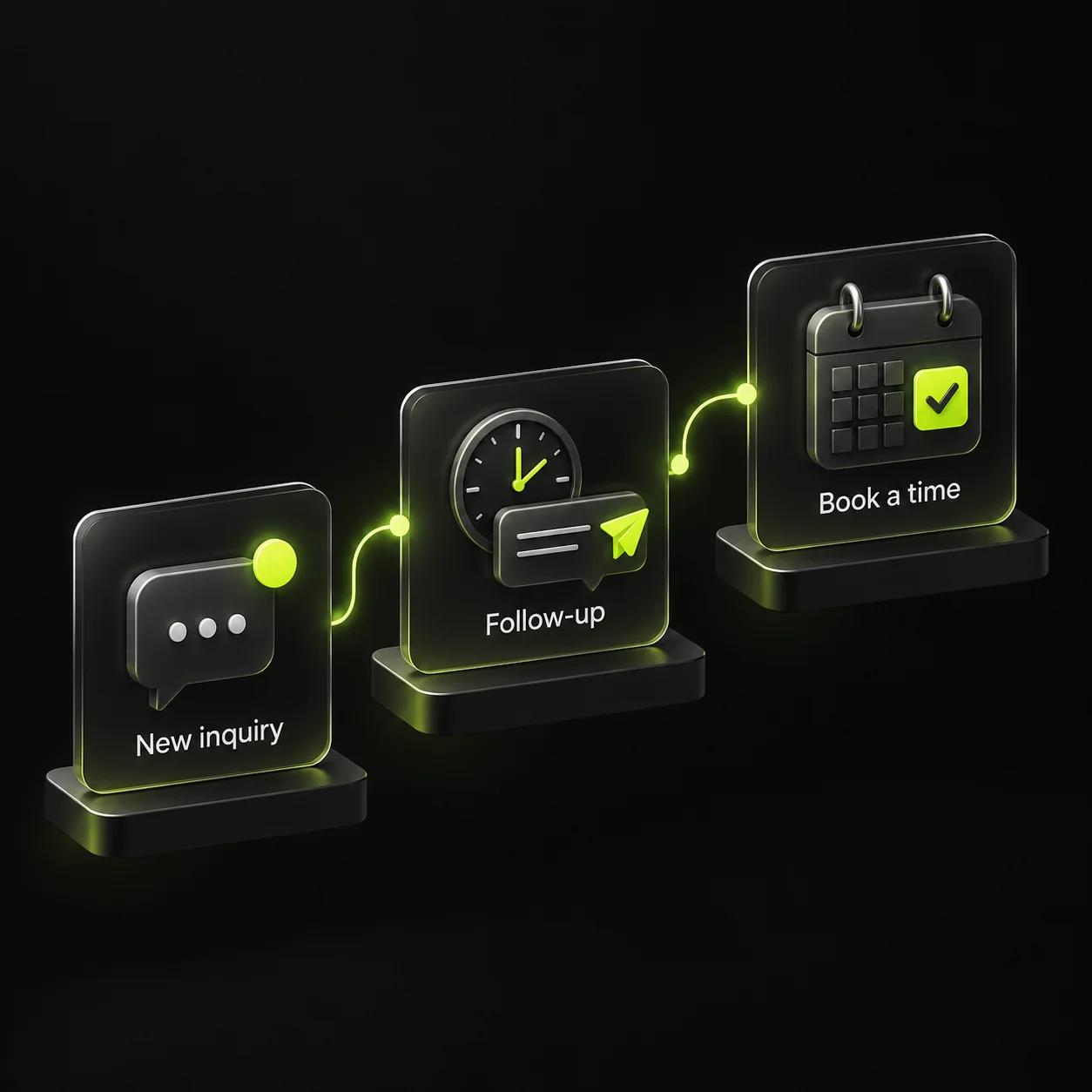
State whether you quote remotely, schedule a site visit, or decide that after reviewing the request. If the property needs assessment, say so. An automatic reply should acknowledge the request and explain when someone will respond, without implying that a job is booked.
Keep one owner and next action for every estimate. For recurring work, confirm scope and visit frequency before discussing a start date. For a larger project, ask about the customer’s decision timeline and agree on a useful follow-up point.
5. Make retention part of the marketing plan
A recurring customer should know how to report a concern, request an extra task, or change the schedule. Put those instructions in the welcome message and keep the conversation in one place. Clear service communication gives customers fewer reasons to chase your office.
For seasonal offers, use permission-based contact lists and a specific reason to reach out. Explain the actual work and availability. Avoid sending a promotion for a service the customer already booked, or continuing reminders after they decline.
After completed work, invite honest reviews through a consistent process. Google allows businesses to share a review link but prohibits incentives for reviews. Keep feedback requests neutral and avoid filtering customers based on the rating you expect.
6. Track fit, not just the number of inquiries
Record the source, service requested, location, estimate status, and whether work became recurring. Add the reason an inquiry was declined, such as outside the service area, unavailable capacity, or a service you do not offer. This makes your next campaign easier to focus.
Review travel time and crew capacity alongside booked work. A campaign that fills a distant area may be worth a separate route day, or it may be a poor match for the current operation. Decide with your actual schedule and costs rather than lead count alone.
For the next two weeks, promote one service in one manageable area. Publish one useful job story, test the estimate form, and review every inquiry with the person scheduling the crew. Expand only after you understand which requests fit the business you want to build.
Sources & further reading
The workflows and templates are DYZIGN LABS suggestions. These primary sources support the platform and maintenance guidance referenced above.